


State of Reflections Volume 2: The Words We Didn’t Have
By Dr. Kyla Noni Brathwaite and Dr. Apryl Williams
Download Feeld

“Normal” in dating and sex is a cultural illusion shaped by our beliefs and social life. Drawing on Feeld and external data, this report explores the gap between what is labeled “normal” and how people actually desire and date, revealing that most desires exist outside what is considered mainstream and are far more common than we are led to believe.
When it comes to norms around sexuality, expression, and dating, perception and reality could not be more at odds with each other. There is no agreed upon definition of “normal.” We found that if you practice it, and it is in the scope of your reality, you consider a desire to be “normal.” This phenomenon starts to crack our understanding of the word normal. Are you normal? No, you’re just you.
This is our first volume of State of Reflections, a report inspired by Feeld’s new self-discovery tool.
Sex and sexual norms don’t just reflect culture, they actively shape it. The same is true of taboos: they shape and are shaped by culture, norms, and power. This dynamic is especially visible on dating apps, where design choices and community standards define what feels acceptable, desirable, or normal.
Dating app culture matters most when you don’t see yourself reflected in it. For those who exist in the margins, outside of the mainstream user—queer daters and anyone exploring non-traditional sexual experiences—transparency, openness, and secure dating apps are essential and can make or break the dating experience.
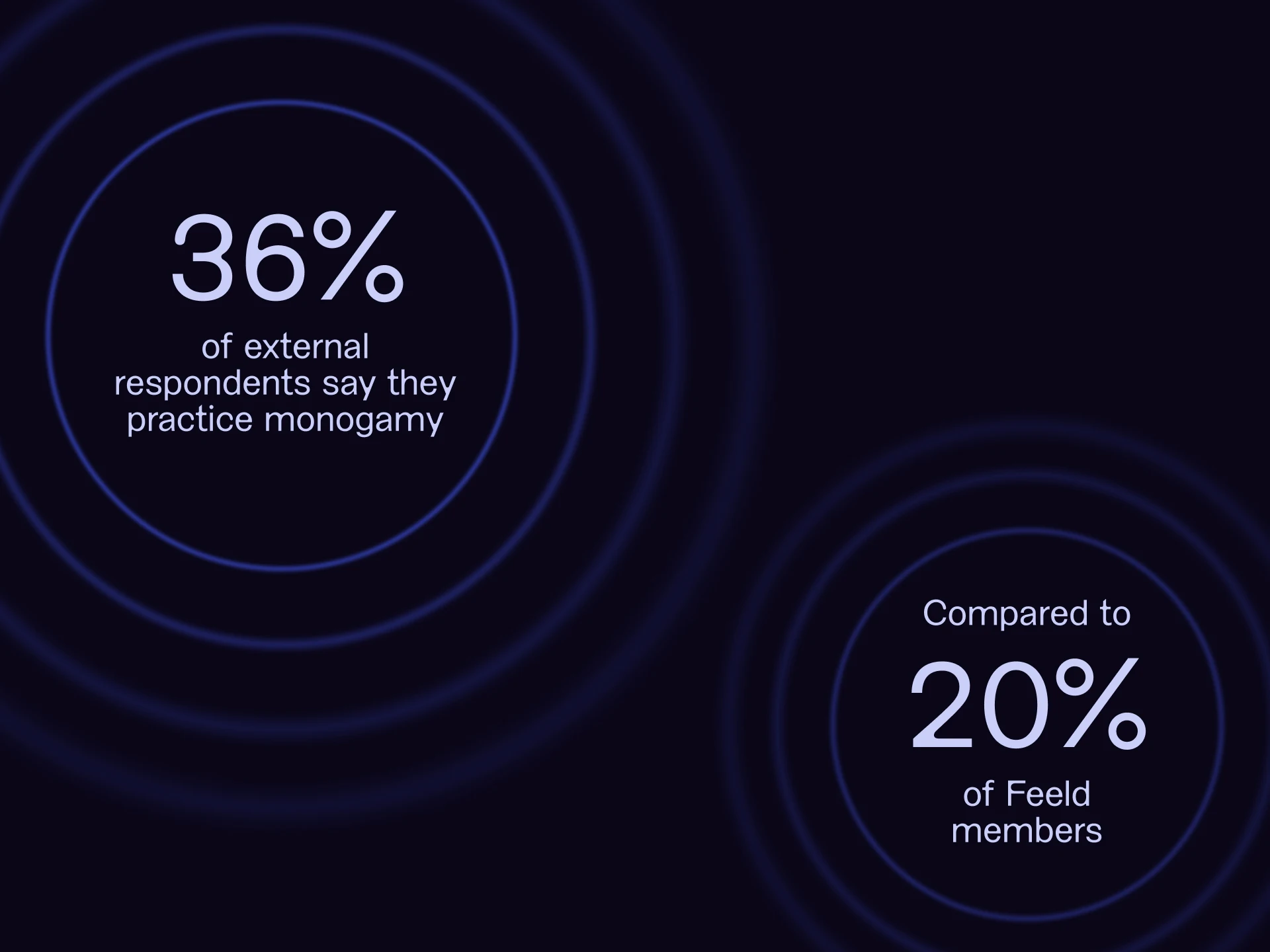
But who exists in the margins and who is considered mainstream? The term “mainstream” historically refers to conventional, established, and representative views of sweeping broad categories. Mass culture is supposed to reflect the beliefs, values, and desires of the majority. Our data shows that the perceived mainstream skews traditional when it comes to sex and relationships: 36% of external respondents state that they practice monogamy, compared to just 20% of Feeld members. When it comes to sex, dating, and connection, the mainstream directly shapes what ideas and practices are considered taboo. Non-hetero sex and kink are viewed as taboo because our society, steeped in centuries of religious and political ideology, places moral value on certain behaviors, sex acts, and monogamy. In short, taboos highlight the values of the status quo.
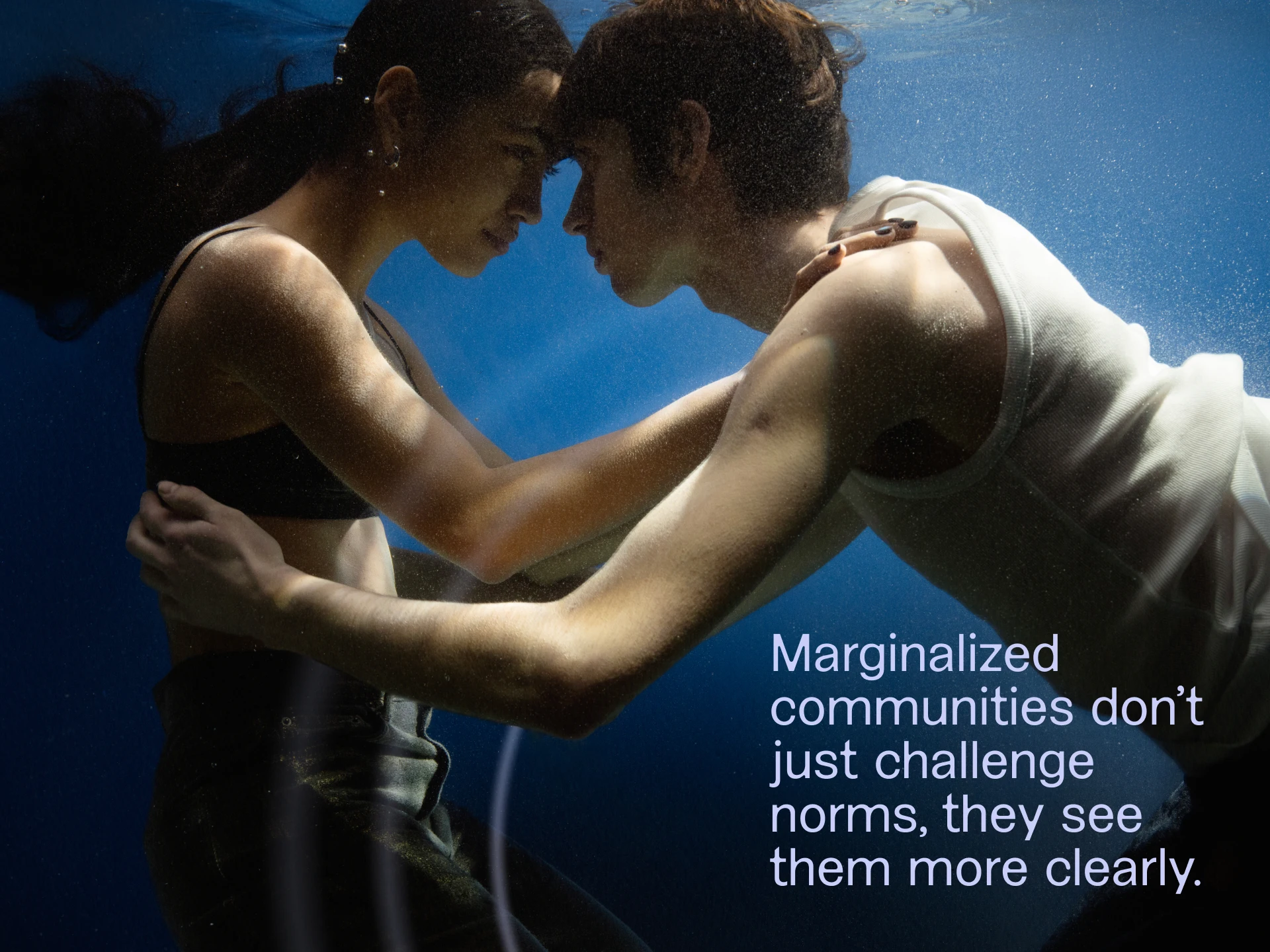
People who date outside of the mainstream are highly perceptive to what gets labeled as normal. That’s because non-normative relationship structures often intertwine with other stigmatized identity categories, including sexual orientation, gender identity, and race. Marginalized folks who routinely experience stigma are more keenly aware of the inherent bias presented by the mainstream because they quite literally experience more bias and stigmatization, with regularity.
For example, while LGBTQ+ Feeld members rate themselves as somewhat normal, they accurately perceive the mainstream to be less accepting of LGBTQ+ identities. This may mean that overexposure to stigma in everyday life may influence our perception of mainstream views. In other words, those who experience, on a daily basis, marginalization in one area of identity such as sexual orientation, gender, or racial identity, become more adept at recognizing it in other cultural settings and are more inclined to resist stigma.
This shows up clearly in our data:
Because straight cis men are the standard by which normalcy is measured, any divergence from cis-heteronormativity may be perceived as abnormal. Women, on the whole, experience greater discrimination in society than men do, and may be more aware of how bias shows up and, therefore, more accepting of a wider range of sexual expression.
This trend continues when we look at the Feeld member population as compared to those who were externally surveyed. When we asked Feeld members to rate how normal each sexuality is, they rated non-straight sexuality as more normal than external respondents do.1
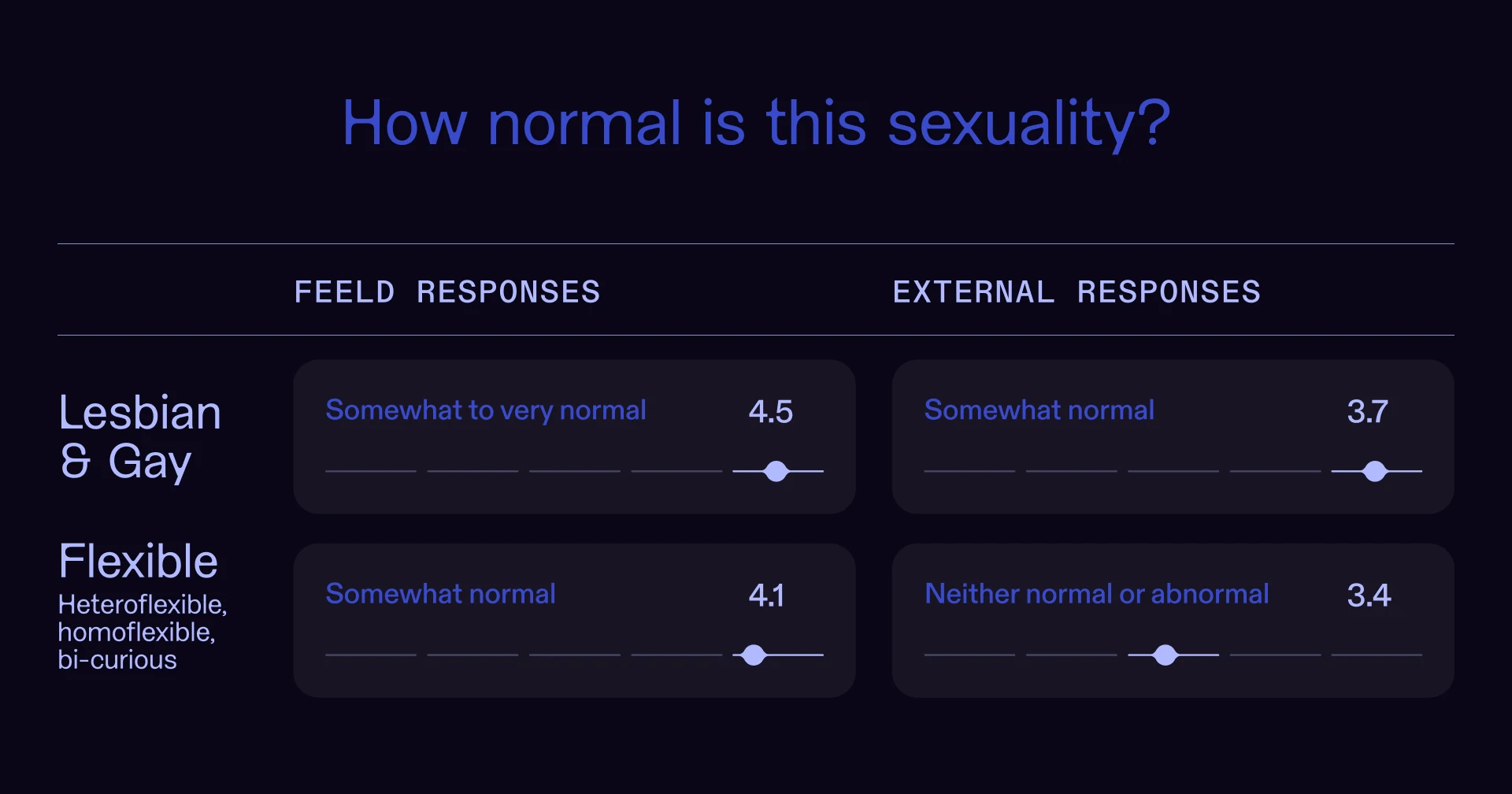
Lesbian and Gay:
Feeld responses: Somewhat to very normal (approximately 4.5)
External responses: Somewhat normal (approximately 3.7)
Flexible (heteroflexible, homoflexible, bi-curious):
Feeld responses: Somewhat normal (4.1)
External responses: Neither normal nor abnormal (3.4)
1 Normalcy ratings were calculated using a 5-point scale where 1 = "very abnormal," 2 = "abnormal,” 3 = “neither normal nor abnormal,” 4 = “somewhat normal,” and 5 = "very normal.”
Feeld members come from all backgrounds, including those that can be stigmatized. If you’ve routinely experienced stigma, it becomes easier to identify. Once we’ve identified a cultural nuance, it's much easier to unlearn social programming on that topic. This means that queer communities may be doing the heavy lifting of educating themselves about perspectives they are unfamiliar with. In fact, acceptance of non-straight sexualities tends to increase with time spent on Feeld. Members who have spent 1 to 3 years on the app have a 6% higher rating of non-straight sexualities compared to newer members who have been on Feeld for less than 3 months. This increase in relative perceptions of normalcy suggests that spending time with others who lead lifestyles different than our own can have an overall positive impact, leading to less stigmatizing beliefs within communities who strive for openness.
Though recent research reveals that polyamory and ethical non-monogamy (ENM) are relationship structures that are growing in acceptance, mainstream portrayals still position it as either laughably complicated or curiously abnormal. Shows like TLC’s Sister Wives, Showtime’s Polyamory: Married & Dating both educate about and stigmatize non-traditional familial arrangements. But stigma isn’t abstract, it can lead to a loss of social status, stereotyping, and shame.
The question then becomes, why are non-traditional relationship structures deemed non-normative by the mainstream? We know that our identities shape our social viewpoints. This means that what is seen as mainstream for some may actually exist in the margins, and vice versa depending on a person’s perspective.
Our data highlights the gap in perspective:
Or to put it another way,
The difference is crucial: Feeld members do not stigmatize monogamy in the way mainstream daters stigmatize non-traditional relationship structures and kink. How do things become destigmatized? By talking about them openly—by bringing them to light. And Feeld members are leading that normalization.
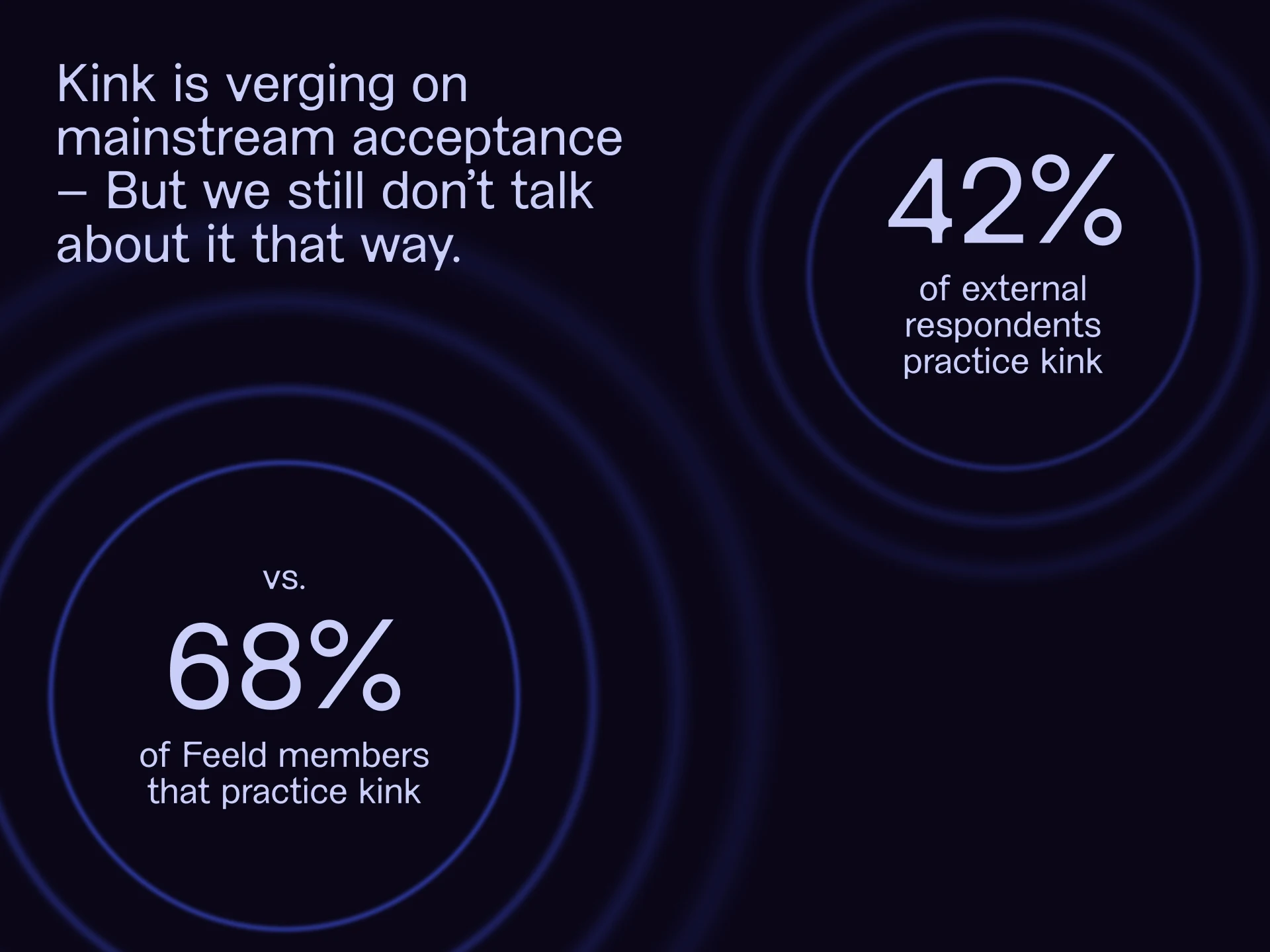
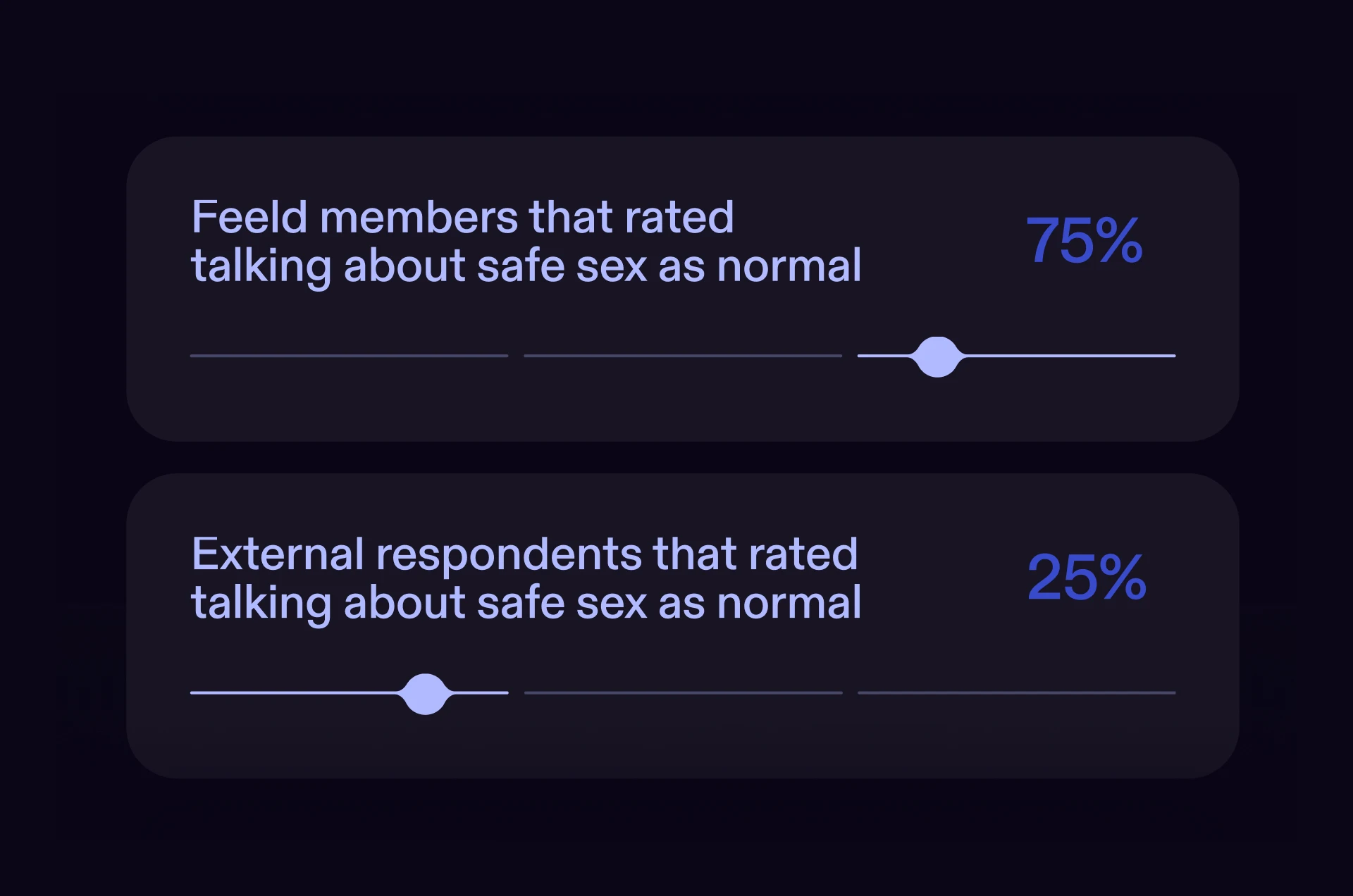
Direct, honest conversation goes a long way toward destigmatizing kink. With 68% of Feeld members regularly practicing kink, it makes sense that explicit conversations about consent, boundaries, and sexual health are prioritized in the community. Approximately 97% of Feeld members prioritize discussions on boundaries and sexual health in relationships and connections. Doing so regularly normalizes safety as a community value.
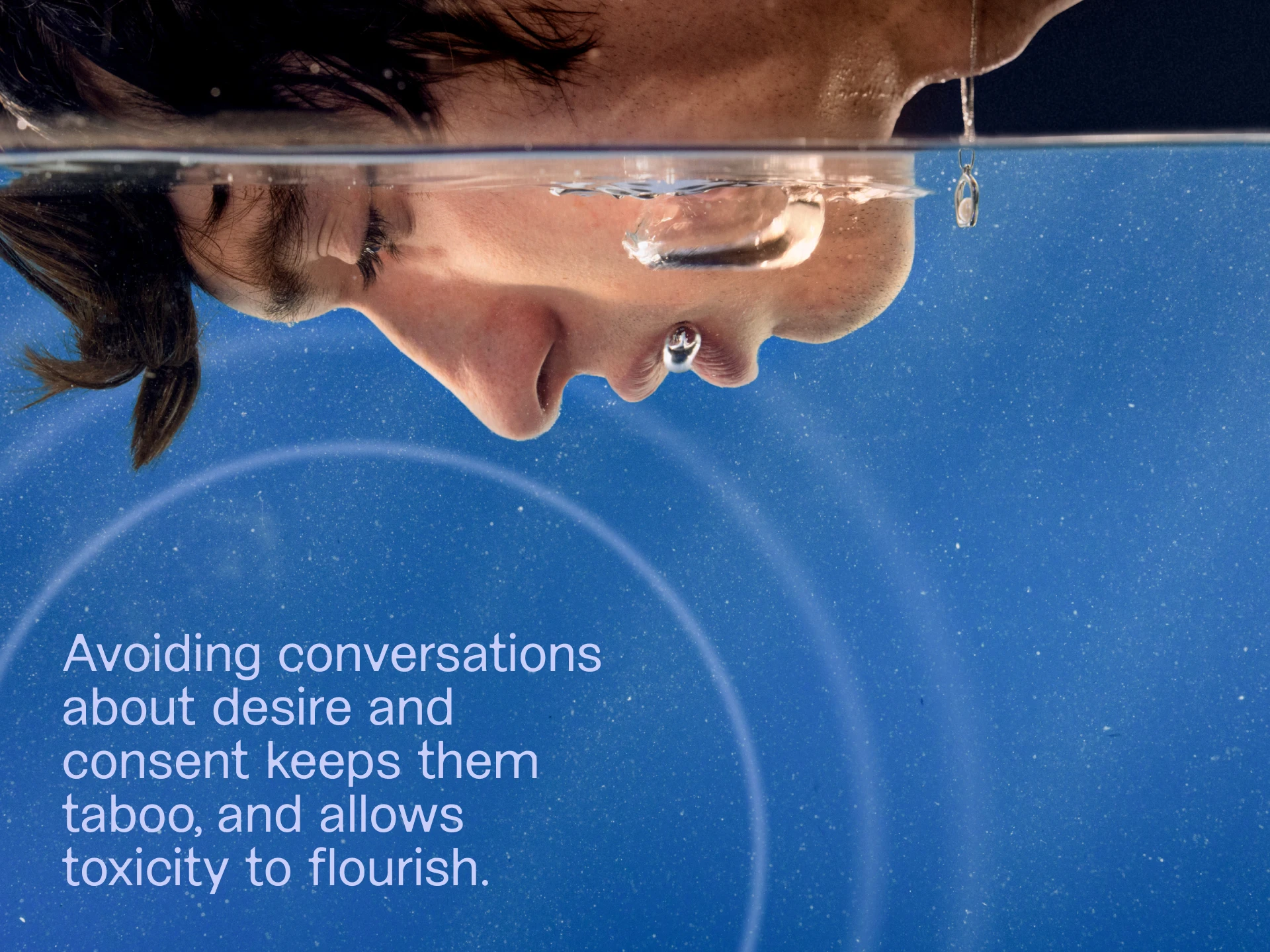
Alternatively, avoiding these topics keeps them taboo, allowing toxicity to flourish. But individuals might, even unknowingly, participate in this toxicity by denying it when we take part in it. For example, 42% of external respondents reported engaging in kink. That’s not a small share of the population. People are pretty kinky and yet mainstream media would have us believe the opposite. In fact, in some cases, the mainstream is even kinkier than Feeld members.
For example:
Where Feeld differs is in members’ openness in exploring different kinds of kinks. They are almost 3 times more likely than the general population to engage in BDSM (2.5x) and power play (2.8x). Feeld is a community of people who are willing to try new things and grow in acceptance of new ideas over time.
In a time when queer, LGBTQ+, and other non-hetero arrangements are increasingly politicized, we might think that straight, non-kinky sex represents the mainstream. Yet, when we asked external participants about views on kink, mainstream practices were surprisingly in favor of kink—38% consider themselves part of the kink community.
Perceptions of kink normalcy increase with kink practice—and 41% of external respondents are practicing kink. Our most recent data show that kink is verging on mainstream acceptance—but we still don’t talk about it that way.
Where does this dissonance come from? Past research demonstrates dissonance between beliefs about identity, sex, and sexual behavior. It shows that people often say identity factors don’t influence their dating choices, but behavior tells another story. Shame may play a bigger role in this puzzle than any of us would like to admit. When our personal beliefs clash with family and community values (that align with the mainstream), individuals may feel shameful about this misalignment.
This disconnect between stated beliefs and actual behavior can have serious consequences for marginalized daters who report feeling exploited by others who are unwilling, or unable, to acknowledge their real desires.
We know that the language of kink is full of word play and language that might not be shared in typical heteronormative spaces, causing those unfamiliar with kink to shy away from their curiosity. This is affirmed by various practices employed by the design of mainstream dating apps. Seeking to make online spaces safer, their toxicity filters may inadvertently misclassify (consensual) sexually explicit conversations in a way that hinders, rather than supports, open communication about desire.
For example, toxic speech detection algorithms have been shown to primarily flag minoritized groups and can increase stigma. By mislabeling conversations about kink, driven by genuine curiosity and attempts to obtain consent, mainstream dating companies may unintentionally create boundaries that limit safer exploration of kink and unconventional sexual arrangements, thereby facilitating unsafe behavior.
Survey results show that:
This suggests that taking part in a community with people who value and prioritize sexual health, consent, and safety encourages members to align with those goals. Alternatively, ground rules for safer sex may be less normalized in mainstream dating spaces. This may be one reason why Feeld members attach a high value to communicating about consent and desire. This is clearly linked to the fact that within the kink community, openness creates an environment without shame and stigma—where people can play on terms that everyone agrees on.
Our data suggest this: you’re probably far less alone than you think.
Most people’s desires, curiosities, and relationship preferences exist well outside the narrow version of “normal” that we’ve been taught to think of as the dominant social norm. The truth is, there is not a definitive “normal.” Rather, the question is, what’s normal for you, your communities, and the people with whom you share relationships? You get to make the rules (and unmake them).
Existing outside the mainstream doesn’t make an idea or lifestyle abnormal. It’s simply uncommon or unconventional. Desire is far more diverse than mainstream culture admits, and that stigma fades when people are given the language and space to talk openly about the unconventional.
The mainstream is what’s popular, not what’s normal. We know that popularity is always in flux. It’s shaped by who gets visibility and who gets heard. When people are given space to be honest and take time to explore the unconventional, it turns out “normal” is much broader than we were ever told.
About Dr. Apryl Williams
Dr. Apryl Williams, Ph.D., is Associate Professor of Media, Communication, and Digital Studies at the University of Michigan and Faculty Associate at the Berkman Klein Center for Internet & Society at Harvard University. She is the author of Not My Type: Automating Sexual Racism in Online Dating (Stanford University Press) and The Injustice of Fairness (The University of California Press). Her previous research has appeared in The New York Times, Vogue, Wired, and The Washington Post, among others. Her work has been supported by grants and fellowships from Google, the Mozilla Foundation, the Notre Dame IBM Technology Ethics Lab, the National Center for Institutional Diversity, and the Berkman Klein Center at Harvard University. With an interdisciplinary background, her research is influenced by black feminism, technology studies, critical internet studies, critical race theory, and critical media studies. She explores the lived black experience as it is shaped by algorithmic technocultures, the gendered black body, and race and racism as they manifest and evolve in our contemporary artificially fragmented society.
Methodology
Between October and November 2025, Feeld invited members to participate in a survey exploring identity, desire, and sexual norms. The survey was also distributed to non-Feeld users through the third-party research agency Censuswide.
In total, 5,712 people responded, including 1,705 Feeld members and 4,007 external participants. Respondents represented six continents and a broad range of ethnicities, sexual orientations, and gender identities.
The survey examined attitudes toward sexual normalcy, gender, ethical non-monogamy (ENM), and kink.
References (in alphabetical order)
Andersen, Martin M., Somogy Varga, and Anna P. Folker. "On the definition of stigma." Journal of evaluation in clinical practice 28, no. 5 (2022): 847-853.
Easton, Matthew J., and John B. Holbein. "The democracy of dating: How political affiliations shape relationship formation." Journal of Experimental Political Science 8, no. 3 (2021): 260-272.
Füllgrabe, Doris, and David S. Smith. "“Monogamy? In this economy?”: Stigma and resilience in consensual non-monogamous relationships." Sexuality & Culture 27, no. 5 (2023): 1955-1976.
Gupta, Shivangi, Mari Tarantino, and Caroline Sanner. "A scoping review of research on polyamory and consensual non‐monogamy: Implications for a more inclusive family science." Journal of Family Theory & Review 16, no. 2 (2024): 151-190.
LeBel, Thomas P. "Perceptions of and responses to stigma." Sociology compass 2, no. 2 (2008): 409-432.
Mahar, Elizabeth A., Louis H. Irving, Allison Derovanesian, Abigail Masterson, and Gregory D. Webster. "Stigma toward consensual non-monogamy: Thematic analysis and minority stress." Personality and Social Psychology Bulletin 50, no. 4 (2024): 571-586.
Panday, Abishrant, and Joyce Tian. "Algorithmic fairness in post-processed toxicity text classification." (2020).
Peck, Alana J., Dana Berkowitz, and Justine Tinkler. "Left, right, Black, and White: how White college students talk about their inter-and intra-racial swiping preferences on Tinder." Sociological Spectrum 41, no. 4 (2021): 304-321.
Rigot, Afsaneh. "Design from the margins." Belfer Center for Science and International Affairs (2022): 2024-12.
Sanchez, Diana. "The Social Psychology of Stigma." An Introduction to Social Psychology (2022).
Sap, Maarten, Dallas Card, Saadia Gabriel, Yejin Choi, and Noah A. Smith. "The risk of racial bias in hate speech detection." In Proceedings of the 57th annual meeting of the association for computational linguistics, pp. 1668-1678. 2019.
Stacey, Lawrence, and TehQuin D. Forbes. "Feeling like a fetish: Racialized feelings, fetishization, and the contours of sexual racism on gay dating apps." The Journal of Sex Research 59, no. 3 (2022): 372-384.
Tohit, Nor Faiza Mohd, and Mainul Haque. "Forbidden conversations: A comprehensive exploration of taboos in sexual and reproductive health." Cureus 16, no. 8 (2024).