The Feeld guide to “closing” a relationship

The world of non-monogamy is broad and nuanced, but one of the most popular structures for people exploring it is an open relationship—a committed emotional relationship where participants are free to date other people, according to whatever boundaries they set.
Being in an open relationship can be something you decide on from the start, or it can evolve over time. Relationships rarely remain static (nor should they!). But this can mean that, sometimes, the structure and boundaries of an open relationship might no longer be serving the people within it.
Non-monogamous relationships can also be closed—there are closed triad relationships, for example, where three people within a committed throuple don’t date outside of each other. This can also apply to polyamorous relationships or polycules with more participants. The practice of closed poly relationships is also known as polyfidelity.
Let’s take a closer look at this interplay between non-monogamy and exclusivity—and what it might mean to move from one state to another by closing an open relationship.
What does a closed relationship mean?
Put simply, an open relationship means those involved are able to engage in intimacy, emotional and/or physical, with people outside of the relationship. With no one-size-fits-all application, this looks different for different people: there might be a “don’t ask, don’t tell” arrangement (where details of other encounters aren’t disclosed), highly communicative polyamorous agreements involving shared Google calendars and spreadsheets, regular casual play partners, or anything in between. It’s up to the individuals within the relationship to set the boundaries and terms that work for them.
And so it follows that a “closed” relationship is, technically, the opposite of an open relationship: a relationship where the participants are exclusively intimate with each other.
It’s not unusual for there to be times during open relationships where, functionally, they are actually closed relationships, when partners aren’t currently dating other people. But the difference is that while the possibility of dating others is always on the table in an open relationship, not so within the parameters of a closed relationship.
There are many reasons people might consider closing an open relationship‚—whether that’s due to life changes, issues within relationships, or simply because the people involved want to prioritize their connection, and pause on being intimate with others. It could be a positive reason too; perhaps you’ve grown closer, and are just enjoying focussing on the relationship.
Does closing a relationship mean that it has to be monogamous?
No! A closed relationship can involve any number of people, whether it’s a closed triad relationship (a throuple, for example), or a larger polyamorous group or polycule. Otherwise known as polyfidelity, in these kinds of structures the participants are all in exclusive relationships with each other.
Is it difficult to close an open relationship?
The difficulty of closing an open relationship depends on different factors, including whether all parties involved are aligned on the desire to close it, the state of the relationship more generally, and the level of communication between everyone. Every relationship is different, whether open or closed, and so the evolution of each one is highly individual.
If one person desires to close the relationship, but the other partner/s are not completely on board, there’s a good chance there will be conflict down the road. Equally, if the decision has been made to close the relationship in a spirit of fear or jealousy, or as a reactive impulse, this isn’t the healthiest foundation on which to evolve the relationship’s direction. It’s worth also considering the state of your relationship more holistically. How are things for all involved as it stands?
“It depends on the reason you opened in the first place,” says Lola Phoenix, author of The Anxious Person’s Guide to Non-Monogamy. “If you feel like the relationship is no longer serving you as an open relationship, it's important to try and understand why that is. The reasons people open vary from wanting more sexual experimentation, a temporary time apart, to giving a partner some freedom—and the signs it's time to close will reflect those original reasons.”
Reasons for closing an open relationship
However committed you are to non-monogamy, external factors can sometimes throw a curveball. But facing problems straight on, rather than burying your head in the sand, can help you address things before they become insurmountable. Here are some factors which might prompt you to close an open relationship.
Burnout
Dating, even for the most enthusiastic among us, can take up a huge amount of capacity —whether emotional, practical, or even potentially financial. If the idea of dating no longer excites you, or even feels like a chore, then you might be experiencing a kind of burnout.
Jealousy
A certain degree of emotional friction is par for the course whilst navigating open relationships and polyamory, and sitting with discomfort can help us to grow. However, if someone is struggling more than usual with the emotional impact of the relationship, then it might be time to take a pause and talk about it.
Life changes
External events can alter the dynamics of any relationship —whether bereavement, physical or mental health problems, a pregnancy, work changes, a move, or something else. During times of great change, dating other people may be a way to incorporate more love and support into a relationship. However, it’s also possible that we may not be in a place to date others outside of our primary relationship in those moments. As an example, two people who have just had a baby might decide to keep things monogamous at a time of intense vulnerability, exhaustion, and emotional and physical change.
Relationship issues
If there are elements that require attention within a relationship, juggling the demands of others might be too much (and it’s not really fair to those you are dating, either, if you can’t meet their needs). Dating can also be used as a distraction technique in order to avoid processing major changes. As Lola puts it: “Opening will not seal cracks. It might just make them wider.”
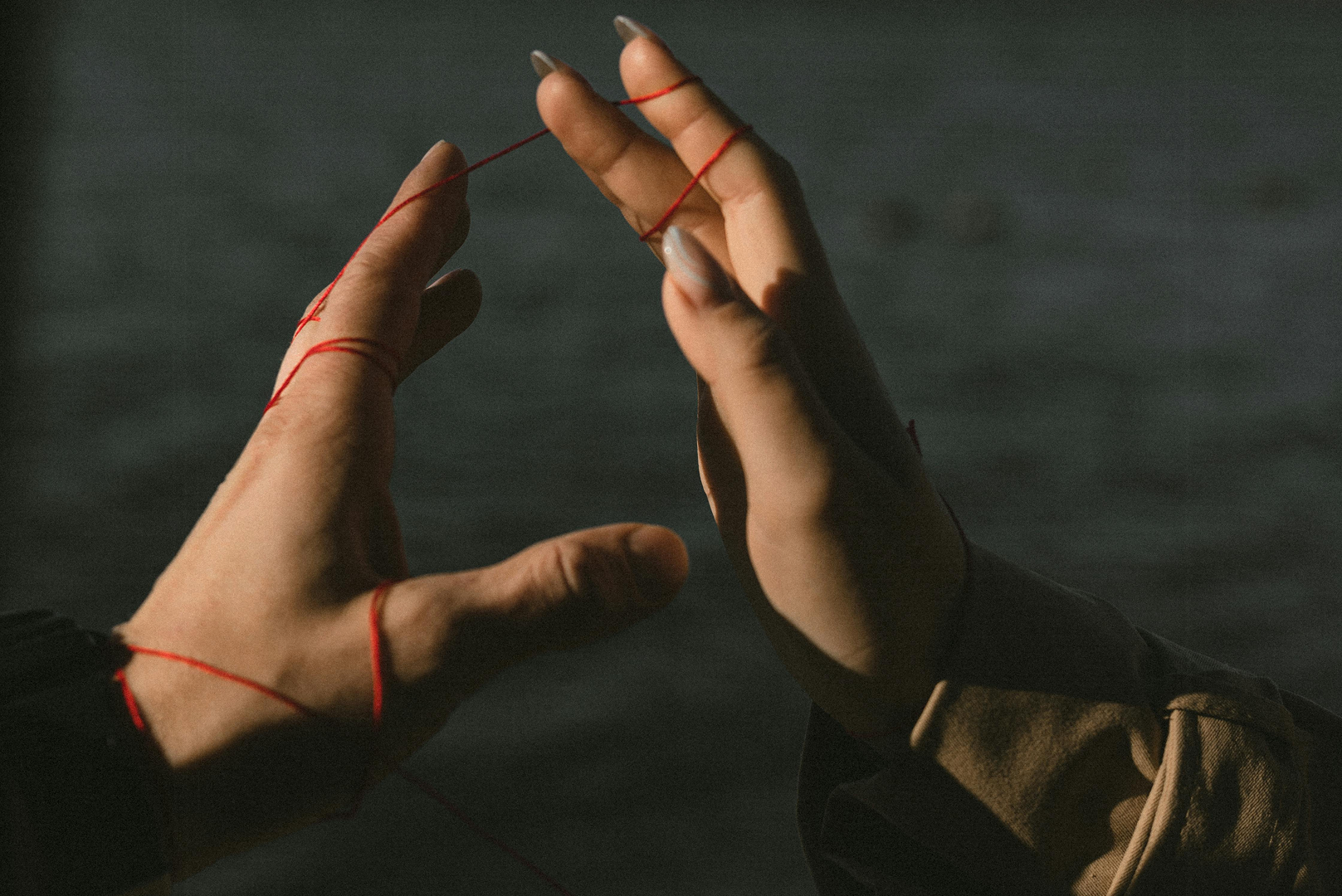
How to ethically and respectfully close a relationship (without creating guilt or shame)
Closing an open relationship is a process to be undertaken with care, respect, and thoughtful communication.
“It has to be a mutual agreement—not one person feeling forced into it,” advises Lola. “There’s a concept called ‘polyamory under duress,’ where someone feels they have to be non-monogamous because their partner wants it and they're afraid to lose the relationship. The reverse, ‘monogamy under duress,’ is equally real and equally worth watching out for.”
No matter the reason, if there are others involved it’s unlikely to be a totally straightforward process. Ending relationships can be emotional for all concerned, and so bear this in mind, whether for yourself or for your partner(s). It’s important to hold space for the feelings of those outside of the primary relationship(s), and it’s vital to be honest, and to treat everyone with respect. Explain the situation, give them the opportunity to respond, and see if there’s scope to negotiate new, more platonic boundaries (if this is something that everybody wants).
Remember to also check in with yourself. You might need more space than usual as you navigate losing people, or even just as you lose the idea of dating others. There can be a sense of shame, or even guilt, attached to the idea that we have somehow “failed” at non-monogamy. We may worry about judgment from others in the community, worry about our own capacities for jealousy, or berate ourselves for poor emotional health, when the reality is that there’s nothing to be ashamed of.
There can be a sense of grief accompanying the decision, too, whether or not you were actively dating. To “close” a relationship can feel like a retreat from intimacy and the possibilities of dating many people, in a way that we can internalize as failure. But dating several people, dealing with their needs and with the dynamics of these structures, can feel overwhelming. Wanting to focus more on fewer partners, whether temporarily or permanently, is a perfectly understandable and valid choice.
Transitioning from non-monogamy to a closed relationship: step-by-step guide
1. Have an honest conversation about what the transition will mean
What are the reasons for “closing” the relationship, and what do you hope to get out of it? Closing an open relationship can be an opportunity for deepening intimacy and self-knowledge. It focuses attention back on the other partner(s), as well as the self, and can be a prime time for reflection.
2. Talk to other partners involved (if applicable)
If one or more of you have been dating other people, it’s important to let them know that the terms of your primary relationship has changed, and so the terms of your relationship to them will change too. Be honest about the reasons for this shift, and give them the space to react and the time to discuss the change.
3. Set new boundaries
You might want to think about what a “closed” relationship means to you and your partner/s. For example: is flirting okay? How about former partners remaining involved in your life, in a new way? What does “exclusivity” mean to you? This is an opportunity to shape the new parameters of your relationship.
4. Be prepared to reassure and compromise
You or a partner might be feeling jealousy (more on this below) or struggling with the emotional impact of ending other relationships. Be mindful of your partners’ feelings, and be prepared to provide extra compassion and reassurance.
Coping with jealousy after closing an open relationship
Jealousy is common in exclusive relationships; as you adjust to the new boundaries of your relationship you might feel anxious about whether you or your partner/s are happy dating one person. But jealousy can also be an opportunity to think about and work through narratives and insecurities we carry.
The best way to manage jealousy is with communication: be open with your partner/s about your concerns, be honest with yourself about where these feelings are coming from, and discuss ways in which you can strengthen trust.
Couples therapy for transitioning to monogamy
A couples therapist can be a great resource for those considering closing an open relationship. You may feel more supported choosing a therapist who specializes in non-monogamy, if possible, as they’ll be best-placed to understand the nuances of different dynamics.
A good therapist can provide you with a welcome space to discuss the reasons for closing your relationship, address any underlying tensions or concerns you might have about what a future relationship looks like. It can be a safe and non-judgmental place to explore difficult feelings, and to come up with a blueprint for how you want to navigate this new shift into monogamy.
Finding community after closing an open relationship
Elsewhere, you might want to connect with others in the community to discuss or learn more about the emotional (and practical!) aspects of closing an open relationship. Online communities such as r/polyamory and r/monogamy on Reddit offer a space to talk about the whole spectrum of non-monogamous and return-to-monogamous dating.
On Feeld, you can connect with like-minded people, and signify where you’re at—and what you’re looking for—in your bio, whether that’s friendship, community, or something more.
Is it possible to go back to monogamy after being open?
It’s definitely possible, as long as everybody is on the same page. You get to write the rules of your own dynamic. Closing the relationship now doesn’t mean closing it forever, or indeed cutting off the possibility of any other kind of relationship evolution.
“Both people should understand what closing means, and why,” says Lola. “And crucially, they should leave space for the conversation to be revisited in the future. Neither person should feel that bringing it up again is forbidden. People change their minds, and that needs to be okay.”
The same way many “closed” relationships become “open,” a relationship can switch between states over time. We are learning in all our relationships, trying things out and attempting to work together better and more honestly, and sometimes this comes with mixed results. Trying out monogamy isn’t a rejection of radical relationship potential, or an indication of failure, but rather one approach among many in the weird, wild, and wonderful ways we can care for and be intimate with other people. If it’s the right decision for a relationship at that time—and only the people within the relationship know this—then it’s the right decision.
If you’re ready to explore more about yourself and your desires—no matter which relationship phase you’re currently in—we’re waiting for you on Feeld.