


Photography by Seth David Rubin
As I write this I’m sitting in front of one of the big windows in the Domercq family apartment in Paris, above the Quai aux Fleurs, where from time to time I’m able to stay when they’re in Geneva, their other home. It’s 2019, mid-March, and the spring flowers are bursting. I look down on the bridge connecting the Île Saint-Louis and the more important Île de la Cité, with its great cathedral and the Pont Neuf. Musicians and mountebanks station themselves all day long on this bridge, making different kinds of music but mostly “La Vie en Rose” on an accordion. People calling me on my telephone from thousands of miles away ask, “What is that music I’m hearing?”
I have just woken up from a strange dream; it’s not yet eight o’clock as I write this:
In my dream I saw myself—or found myself, a much younger self—painting a perfect Mughal miniature of a battle scene from the Akbar period, but in a sped-up way. There are vivid colors in my dream, especially a bright yellow ocher. I perfectly draw and paint in all the figures, wearing their armor and helmets. My miniature is about the size of an eight-by-eleven inch piece of paper.The dream now jumps forward in time. My Akbar miniature is about to be sold at an auction house like Christie’s or Sotheby’s, as a real Mughal painting. People in the dream examine it carefully and accept it as real and important. I do not tell any of them that I painted it, but let them believe it is authentic. As the sale is about to begin, a friend of mine—someone like Francesca Galloway—says she intends to bid on it for a museum. Only then do I have pangs of conscience: How can I let her buy my fake and then sell it to a museum? I struggle with myself, thinking that the whole thing has gone too far, that I must stop it. But if I do that, I will look bad for painting, for creating, this perfect fake. If on the other hand I allow the sale to go through, my friend—the buyer—will look bad.
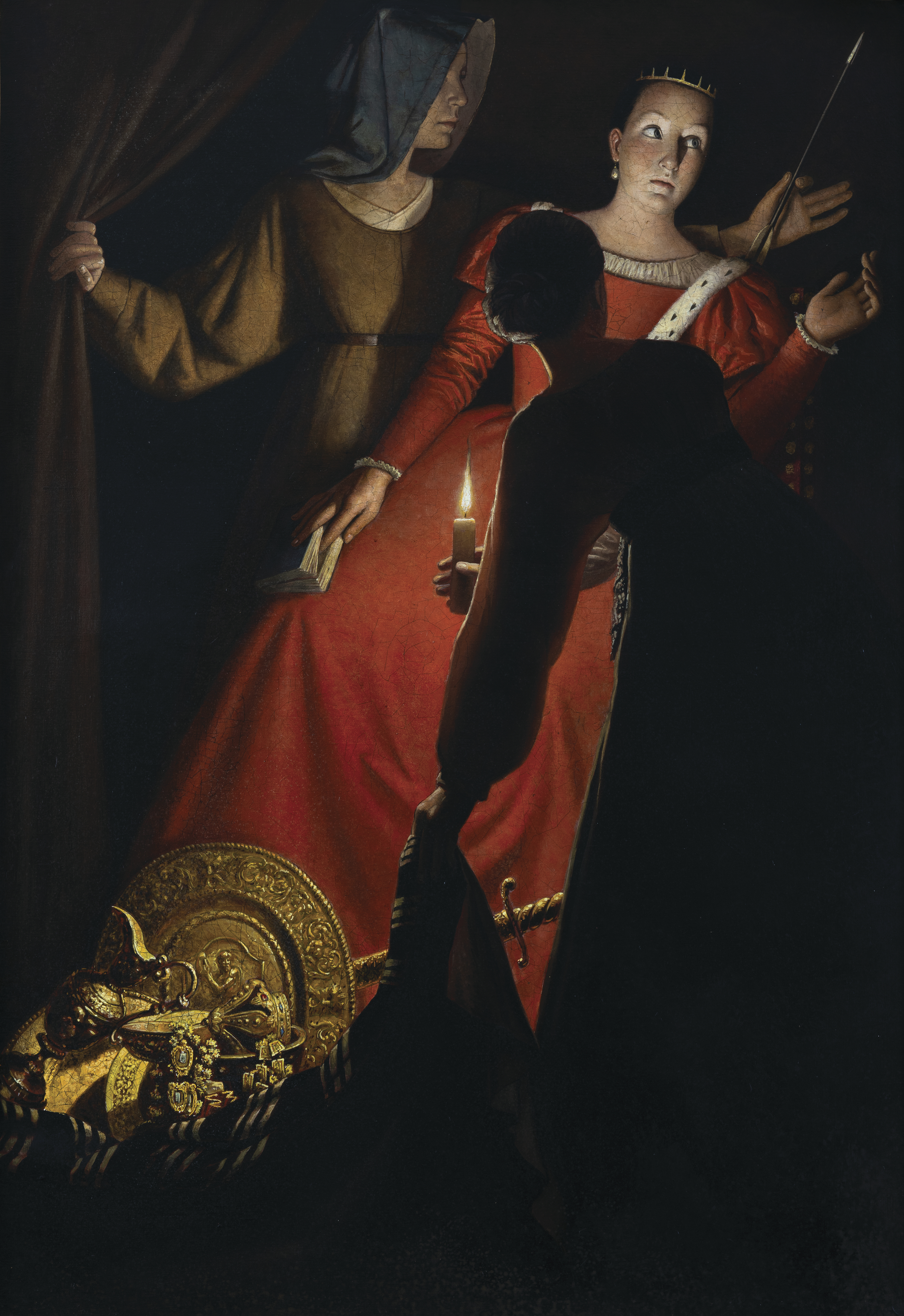
An imagined painting by Georges de la Tour depicting Saint Ursula, created for Merchant Ivory’s film Le Divorce (2003).
As I’m mulling this over, with a growing determination to speak out, I’m also watching a tall, scholarly looking man with a small gray beard through the sales-room window. He is some senior kind of person, perhaps the head of the auction house about to sell my fake. He is seated in his office at his desk, and he looks across to me.
So I tell the would-be buyer—or, rather, advise her—do not buy this picture. It is wrong—there is something very wrong about it. She doesn’t want to believe this. And in my dream’s memory, I am back making the first sketches of the miniature. I see myself drawing its outlines. But I am relieved. I have done the right thing. Let the chips fall where they may. My disappointment is only that this fine Mughal picture is not real, and not that it is some fake that I made.
So I tell the would-be buyer—or, rather, advise her—do not buy this picture. It is wrong—there is something very wrong about it.
I told no one that I had done this at the time, but I knew I should credit the writer. Faure’s book had been published by Harper and Brothers in New York. I wrote up all my credits for the film’s end titles, including his. But then I had a craven thought: If I acknowledged using passages from the Faure book, I might have to pay a big amount to Harper and Brothers, and to the author’s estate. So I removed the reference to Faure in my end credits and brought out my film without mentioning him. And so the film has remained for the seventy years or so of its existence, no one the wiser—except for one person: I told this story to my close friend, the author John Pym, when we were going over my earliest films for something he was writing about Merchant Ivory. He was shocked, as one would expect. Youthful plagiarism is still plagiarism, and that word conjures up heavy instances of this kind of high-handed theft by minor writers.
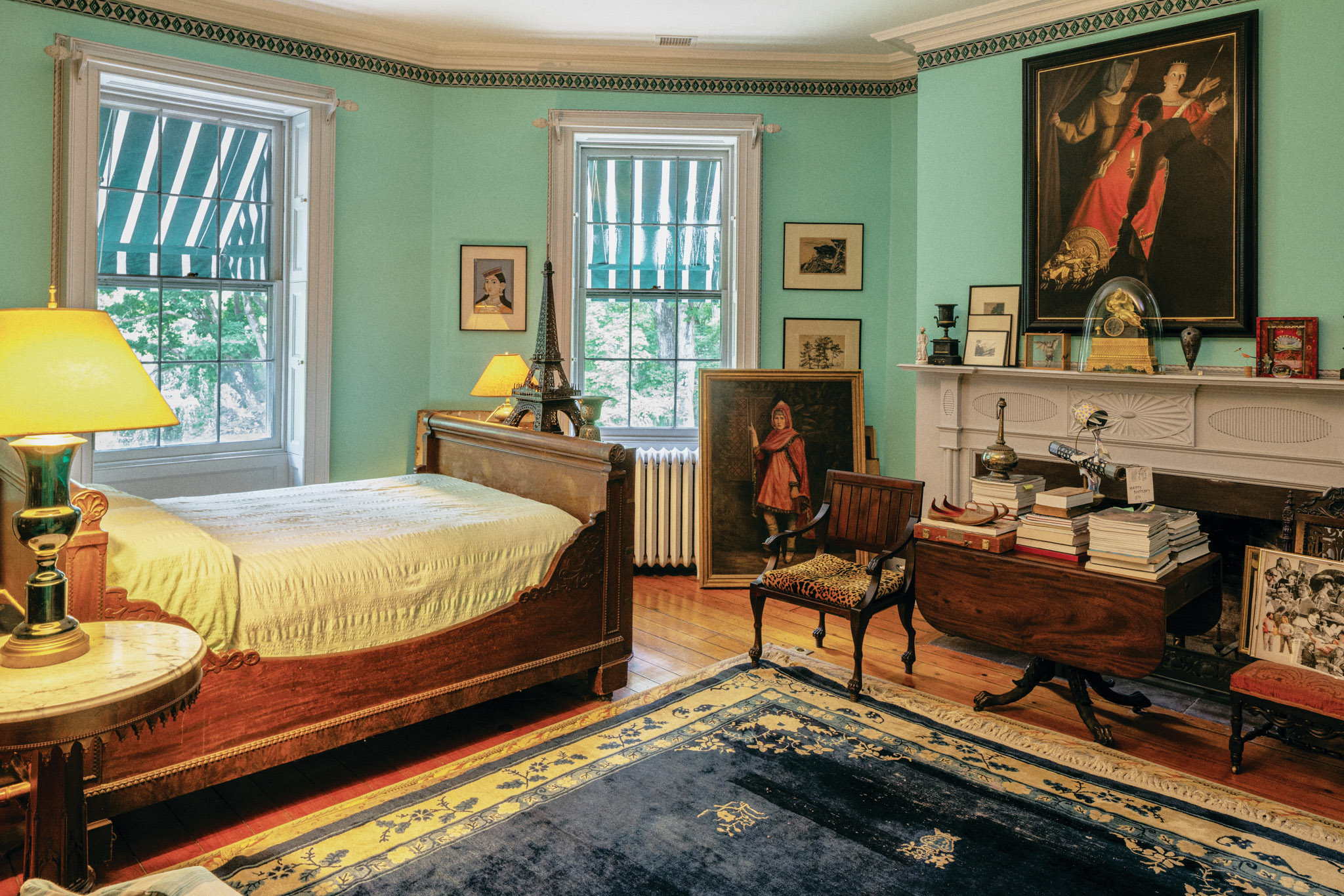
A guest room in Ivory’s nineteenth-century home in Claverack, upstate New York, where the painting from the film now permanently hangs.
But I was not done with faking Saint Ursula. When I came to make Le Divorce in Paris in 2002, it was necessary to create another Saint Ursula: one by the seventeenth-century painter Georges de La Tour. As far as we know, La Tour never painted a Saint Ursula. She was the patron saint of schoolgirls, and when depicted by other artists, she usually has a book in her hand. In Diane Johnson’s novel on which our film is based, a La Tour owned by an American family in Santa Barbara, California, becomes a contested asset in a French divorce case. So we made one. By now, well aware of La Tour—a favorite French painter of mine—and of his style, and of his young women in various states of exaltation, often seen by candlelight, I laid out a possible Saint Ursula. She too would be seen, as expected, by candlelight, with a heap of spurned, glinting treasure at her feet, sent by a pagan suitor. She was to be assisted by two of her virgin ladies—in-waiting, one holding aloft an arrow, symbol of her martyrdom. This design was given to a restorer at the Louvre. He did a terrific job, complete with La Tour’s glowing colors, his dramatic contrasts of light and shadow, his grays, his browns, and a vivid orange dress for the saint, who holds a candle that illuminates the scene. Le Divorce came out in 2003 and was fairly successful, if not a hit for Fox Searchlight, who had financed it. When writing up a statement for the American press, I wrote a few paragraphs for the Fox publicity department on “Who Was Saint Ursula?” For this I quoted from a book of Glenway Wescott’s called A Calendar of Saints for Unbelievers. But on this occasion I went to the trouble of contacting the author’s representative, who asked for a few hundred dollars.
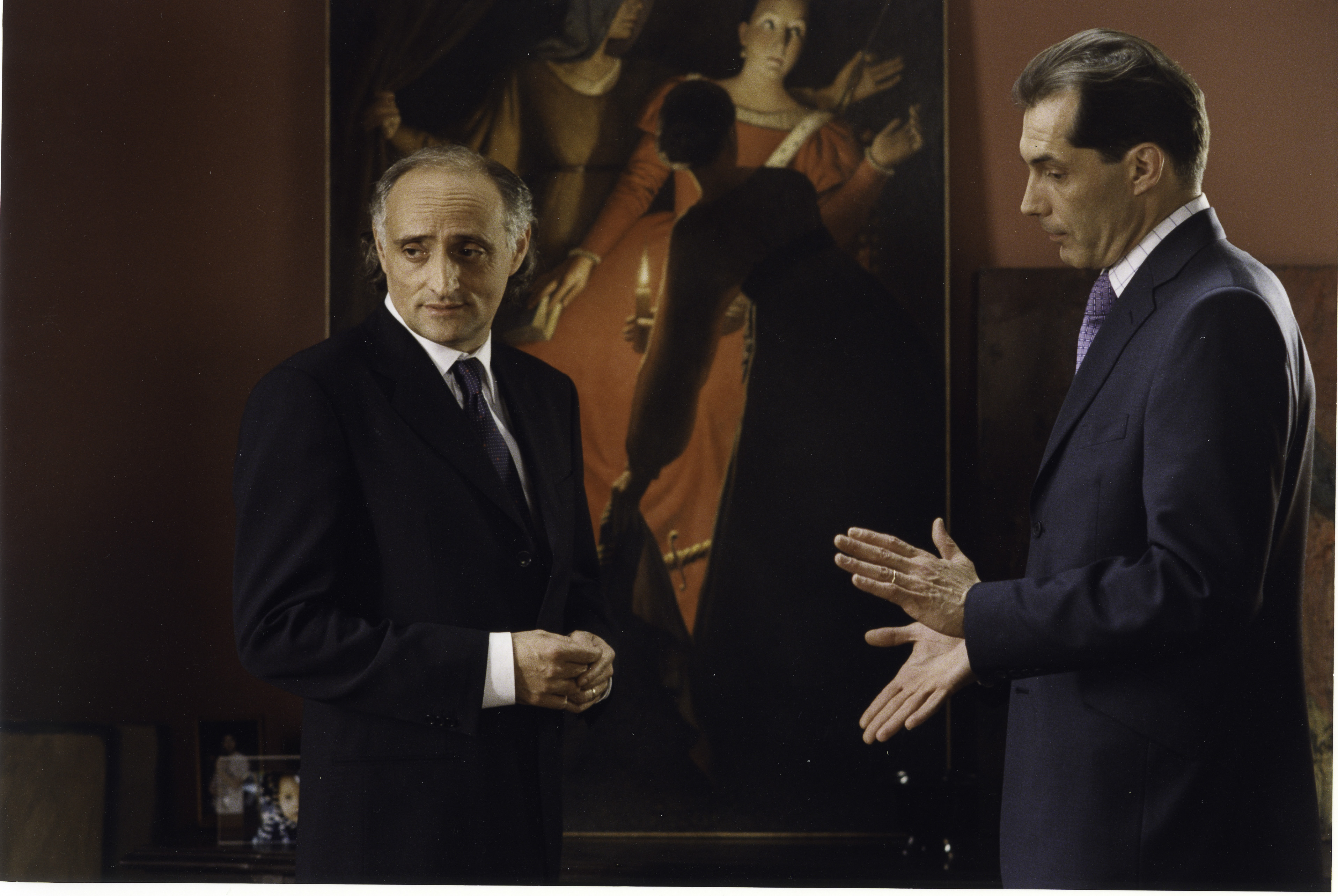
In Le Divorce, an expert from the Louvre appraises the painting and announces that it is not a La Tour; it is “in the manner of, at best.”
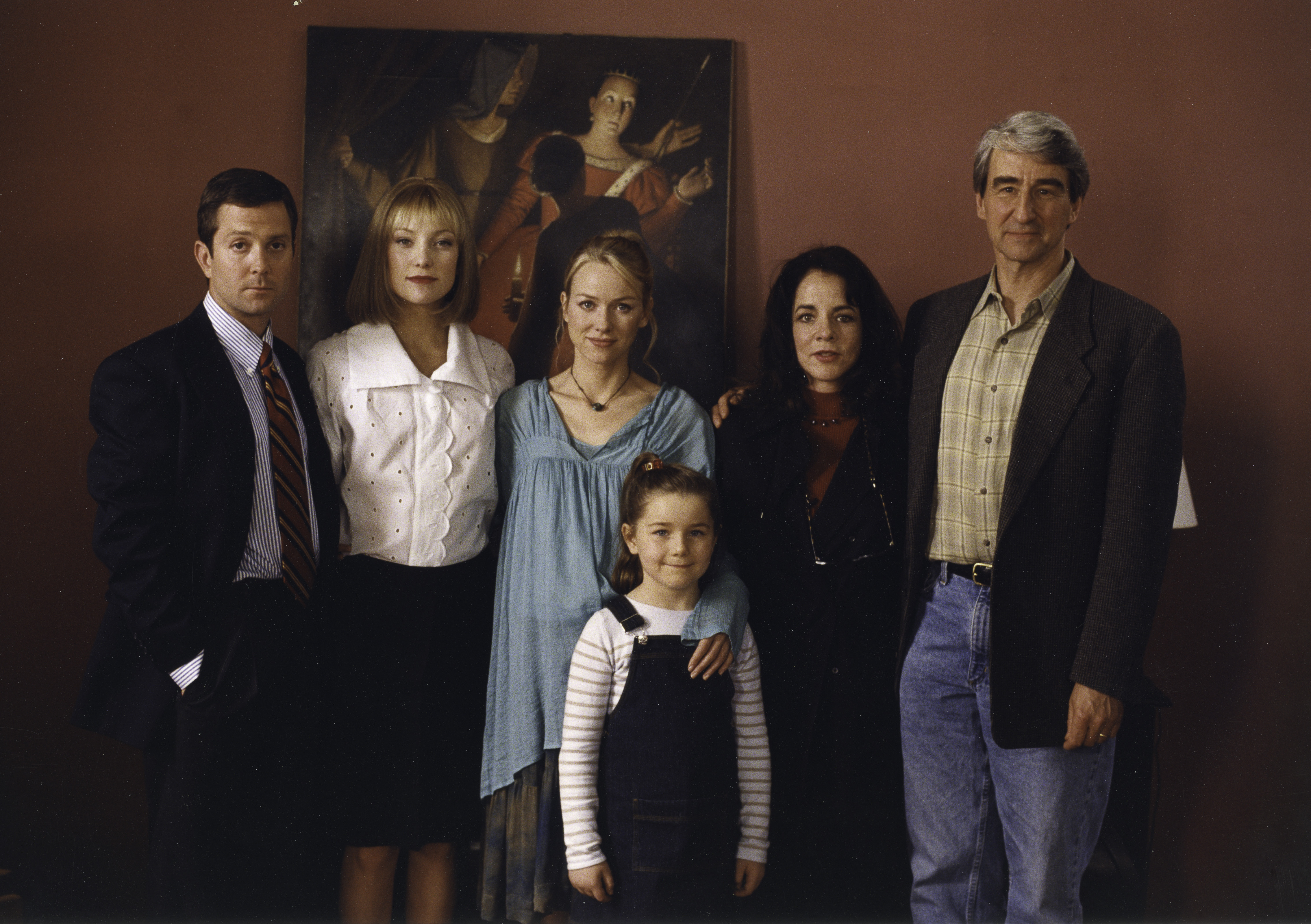
All happy families are alike, but some families are related to Kate Hudson. Pictured here is the cast playing the owners of the contested La Tour painting, which, in the film, is ultimately bought by the Getty in Los Angeles for $4.5 million.
There is a final Saint Ursula moment. After our film was finished I brought the Saint Ursula picture from Paris to my house in Claverack in upstate New York, and set it up on a mantlepiece. One night there was a guest for dinner, a French art historian teaching at Vassar. I thought, in a joke-making frame of mind, that I would confront her with my fake La Tour and hear what she had to say about it. So, as we all sat in front of a nice fire, relaxed and having a drink, Saint Ursula was produced from another room and set in front of her. What did she think, I asked her. She stiffened up—it was not a nice joke probably—and I waited for her response. To have an unknown Georges de La Tour suddenly appear in someone’s living room in upstate New York would be a big surprise. She knew she was being tested, so she stalled for a few moments while summoning up her art historian’s judgment, whereupon she pronounced my Saint Ursula a probable fake—though, she admitted, a very good one. We went into dinner, but not before she looked at the back of the canvas, which was a very old one the Louvre had had on hand.


